
7 Common Budgeting Mistakes and How to Avoid Them
7 Common Budgeting Mistakes and How to Avoid Them
Excerpt
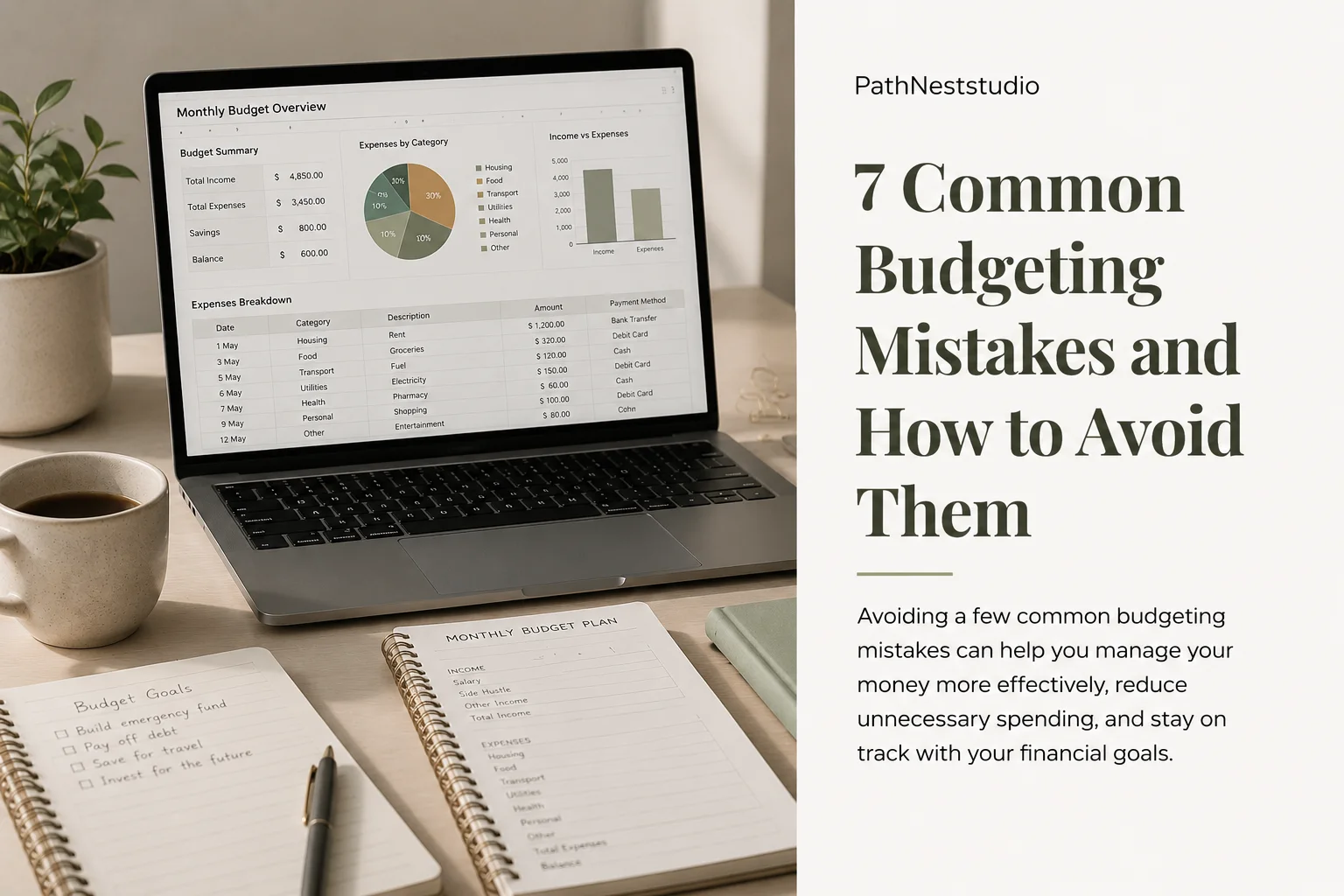
Avoiding a few common budgeting mistakes can help you manage your money more effectively, reduce unnecessary spending, and stay on track with your financial goals.
7 Common Budgeting Mistakes and How to Avoid Them
Creating a budget is an excellent first step toward managing your money, but even the best budget won't help if you make common mistakes. Fortunately, most budgeting problems are easy to fix once you recognize them.
Here are seven budgeting mistakes and practical ways to avoid them.
1. Not Tracking Your Spending
Many people create a budget but never track where their money actually goes.
Keep a record of your daily expenses so you always know how much you've spent and where your money is going.
2. Setting Unrealistic Budgets
A budget that is too strict can be difficult to follow.
Instead of cutting every unnecessary expense immediately, create a realistic budget that fits your lifestyle.
3. Forgetting Irregular Expenses
Annual subscriptions, gifts, holidays, or car maintenance can easily disrupt your budget if you don't plan for them.
Include these occasional expenses in your yearly financial planning.
4. Not Reviewing Your Budget
Your financial situation changes over time.
Review your budget every month and adjust it whenever your income or expenses change.
5. Ignoring Small Purchases
Small daily purchases may seem insignificant, but they can add up quickly over time.
Tracking even small expenses helps you make more informed financial decisions.
6. Not Saving Consistently
Saving isn't only for large incomes.
Even saving a small amount regularly can help you build healthier financial habits and prepare for future needs.
7. Giving Up Too Quickly
No budget is perfect during the first month.
If something doesn't work, adjust your plan instead of abandoning it. Budgeting is a skill that improves with practice.
Conclusion
Budgeting isn't about perfection—it's about building better financial habits over time. By avoiding these common mistakes and reviewing your budget regularly, you'll be better prepared to manage your money with confidence and work toward your long-term financial goals.