
How to create a weekly plan
How to Create a Weekly Study Plan That Actually Works
Excerpt
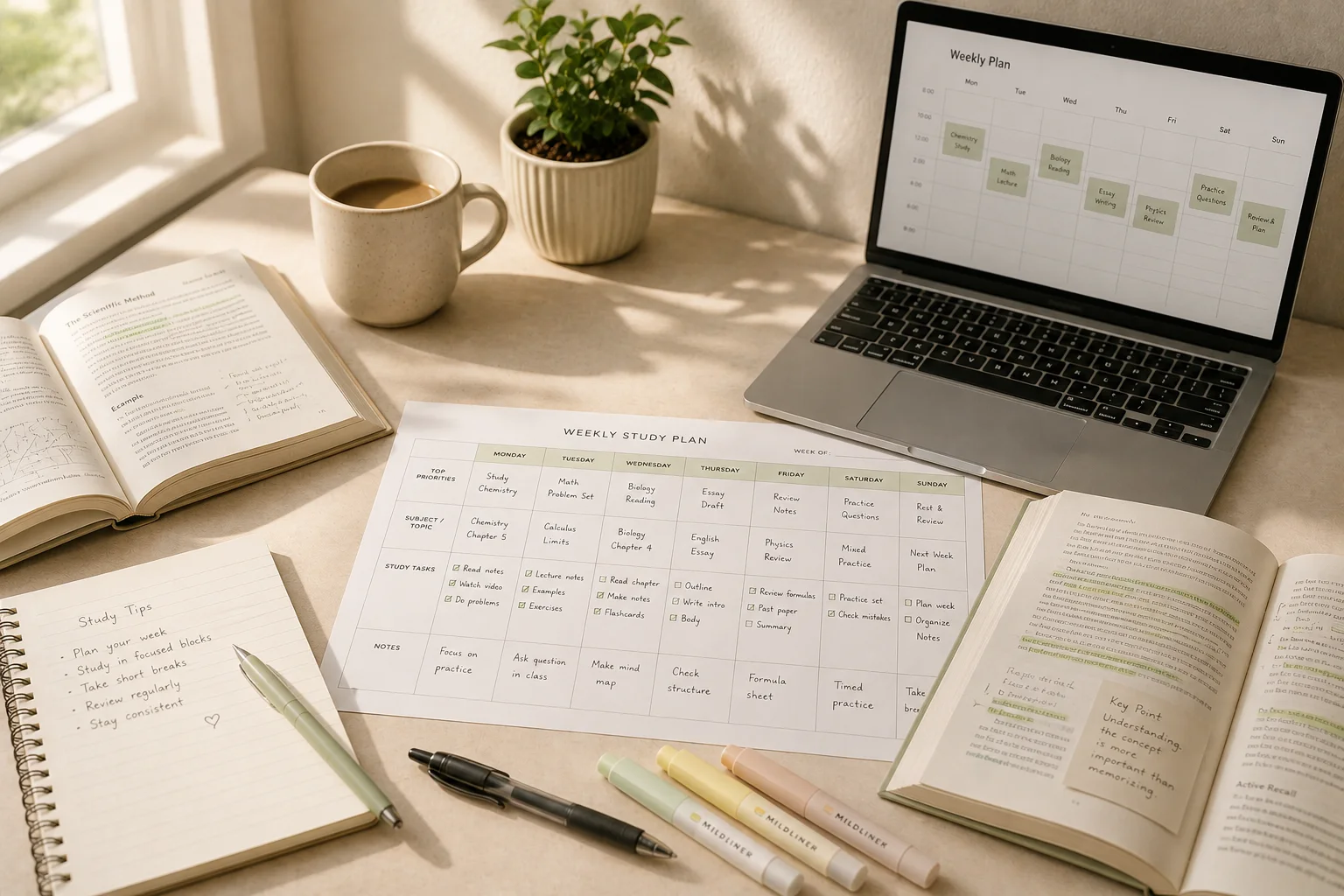
A simple weekly study plan can help you stay organized, reduce stress, and make better use of your study time. Here's how to build a plan you can actually stick to.
How to Create a Weekly Study Plan That Actually Works
A weekly study plan is one of the simplest ways to stay organized and reduce stress throughout the school term. Instead of wondering what to study each day, you'll have a clear plan that helps you stay focused and make steady progress.
Here are six practical steps to create a weekly study plan that actually works.
1. Write Down Everything You Need to Do
Start by listing all your classes, assignments, homework, quizzes, exams, and projects. Seeing everything in one place makes it much easier to organize your week.
2. Set Your Priorities
Not every task is equally important. Focus first on assignments with the closest deadlines or subjects that require extra attention.
Ask yourself:
What needs to be completed this week?
Which subject is the most challenging?
What can wait until later?
3. Break Big Tasks into Smaller Steps
Large assignments can feel overwhelming. Divide them into smaller, manageable tasks.
For example:
Read Chapter 4
Review class notes
Complete practice questions
Revise key concepts
Small tasks are easier to complete and help you stay motivated.
4. Schedule Focused Study Sessions
Plan study sessions of 30–60 minutes with short breaks in between. Short, focused sessions often lead to better concentration than studying for several hours without a break.
5. Keep Your Plan Flexible
Unexpected events happen. Leave some free time in your schedule so you can adjust your plan when necessary without feeling behind.
A flexible study plan is much easier to maintain over time.
6. Review Your Week
At the end of each week, spend a few minutes reviewing your progress.
Ask yourself:
What did I complete?
What should I improve next week?
Which subjects need more attention?
Regular reviews help you build stronger study habits and stay consistent.
Conclusion
Creating a weekly study plan doesn't have to be complicated. A simple, realistic plan can help you stay organized, reduce stress, and make better use of your study time. By setting priorities, breaking tasks into smaller steps, and reviewing your progress each week, you'll build study habits that support long-term academic success.
Remember, consistency is more important than perfection. Small steps taken every week can lead to meaningful results over time.